
Why Hertfordshire Has Some of the Hardest Water in the UK
If you live in Hemel Hempstead, St Albans, Berkhamsted, or anywhere across Hertfordshire, your water is hard. Very hard, in fact – and it is not a coincidence or a seasonal issue. It is geology.
The entire county sits on chalk and limestone bedrock. As rainwater filters down through those layers, it dissolves calcium and magnesium naturally – and those minerals stay in the water that eventually arrives at your tap via Affinity Water, the region’s main supplier. Affinity Water is the largest water-only company in the UK, supplying 3.8 million people across Hertfordshire, Buckinghamshire, Bedfordshire, and surrounding areas – almost entirely from chalk aquifer sources.
Hemel Hempstead’s water hardness measures 333 mg/L calcium carbonate – placing it 9th in the UK’s hardest water towns list. The Hertfordshire county average is 303 mg/L, well above the “very hard” threshold of 200 mg/L. Some Hertfordshire postcodes reach as high as 378 mg/L.
Sources: WaterHard.uk county data; TapWater.uk UK hardness guide (2026); Hemel Today, January 2020.
| Town | Hardness (mg/L) | Classification |
|---|---|---|
| Hemel Hempstead | 333 | Very Hard |
| St Albans | 323 | Very Hard |
| Watford | 358 | Very Hard |
| Stevenage | 355 | Very Hard |
| Hertfordshire average | 303 | Very Hard |
| UK soft water areas (e.g. Scotland) | 10–50 | Soft |
For context: water above 200 mg/L is classified as very hard. Hemel Hempstead sits 66% above that threshold. A household in the Scottish Highlands may have water at 20–30 mg/L. The difference in what that does to your pipes, appliances, and boiler over ten years is enormous.
What Hard Water Is Doing to Your Hertfordshire Home Right Now
Most homeowners in Hemel Hempstead and across Hertfordshire are familiar with the visible effects of hard water – the chalky white residue around taps, the kettle that furs up within weeks, the shower screen that always looks dull. What is less visible, and considerably more expensive, is what is happening inside the heating system.
When hard water is heated, the dissolved calcium and magnesium minerals crystallise and deposit as limescale on any surface they contact – most critically, on the heat exchanger inside your boiler and on heating elements throughout the system.
Just 1.6mm of limescale on a heating element causes a 12% increase in energy consumption. At 3mm of scale, that figure rises to 24%. The Energy Saving Trust calculates this translates to £96–£144 per year wasted on heating alone for a typical household. Boilers in very hard water areas (300+ mg/L) fail 2.3 times more frequently than those in soft water areas, with average lifespan dropping from 15 years to 8–10 years without treatment.
Sources: British Water (via Monarch Water, P&H Engineering); Energy Saving Trust (via HeatingAndPlumbingWorld.co.uk).
The full picture of hard water damage
- Boiler and heating system: Limescale coats heat exchanger surfaces, forcing the boiler to burn more fuel to achieve the same output. Over time this causes overheating, cracked welds, and premature failure – all avoidable.
- Washing machine and dishwasher: Scale accumulates on heating elements and internal components, reducing performance and significantly shortening appliance lifespan. Hard water areas see far higher rates of early appliance replacement.
- Taps, showerheads, and mixers: Mineral deposits block aerators and restrict flow, eventually seizing internal components. Cartridges and valves that should last ten years often need replacing within three in hard water areas.
- Pipework: In older properties, scale can restrict bore diameter progressively over years, reducing water pressure throughout the house.
- Skin and hair: Calcium and magnesium leave a mineral film on skin, disrupting the skin’s natural moisture barrier. This is a particular concern for anyone with eczema, psoriasis, or sensitive skin – conditions that are frequently reported to improve noticeably after a water softener is installed.
- Cleaning costs: Hard water dramatically reduces the lathering ability of soaps and detergents, meaning households use significantly more product to achieve the same result. British Water estimates a family of four can save around £200 per year on cleaning products, shampoo, and detergents alone after switching to softened water.
💡 The real cost of hard water: Research puts the total measurable annual cost of hard water to a typical UK household at £300–£440, accounting for boiler inefficiency, shortened appliance lifespan, and excess product usage. In a town like Hemel Hempstead – at 333 mg/L – that figure is at the higher end of the range.
What Is a Water Softener – and How Does It Work?
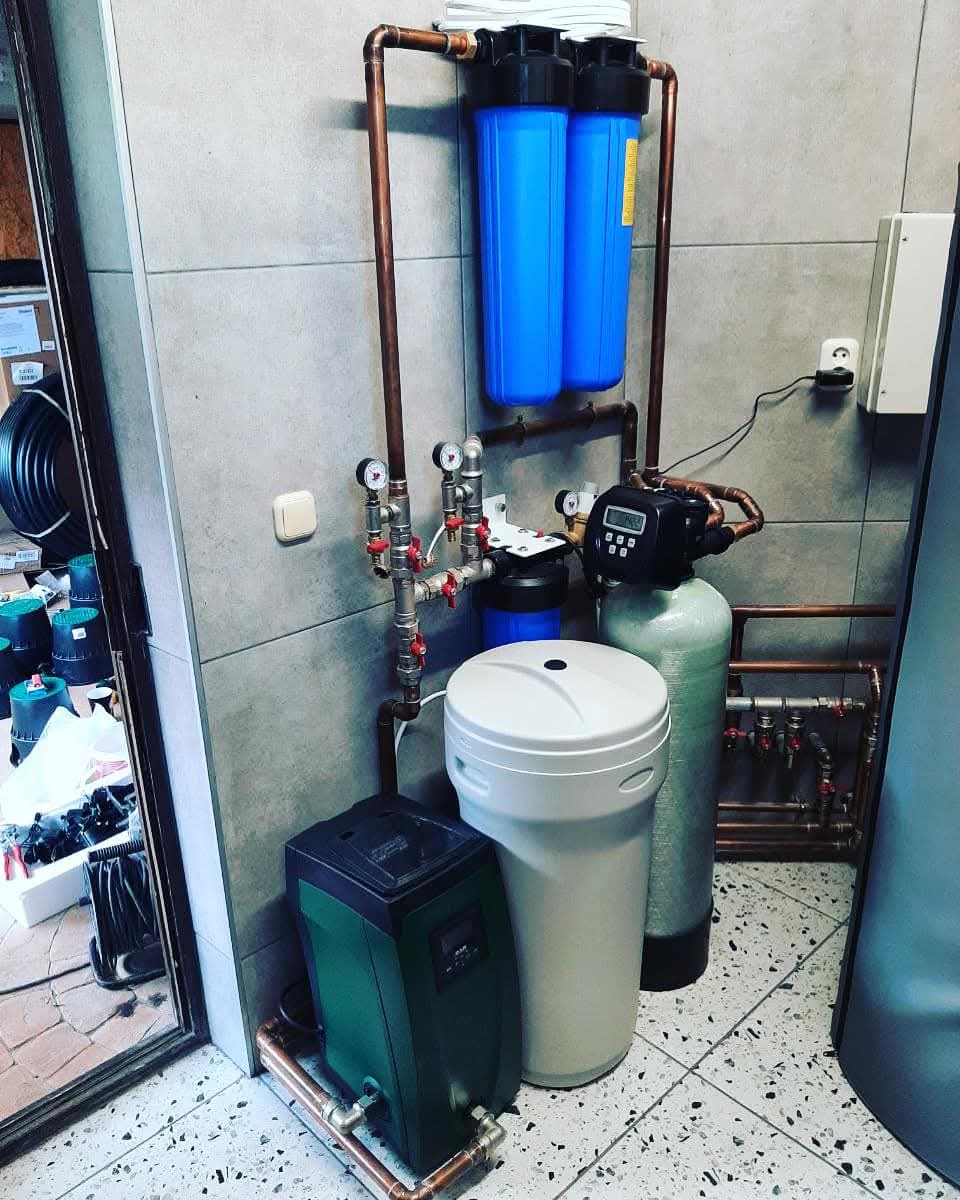
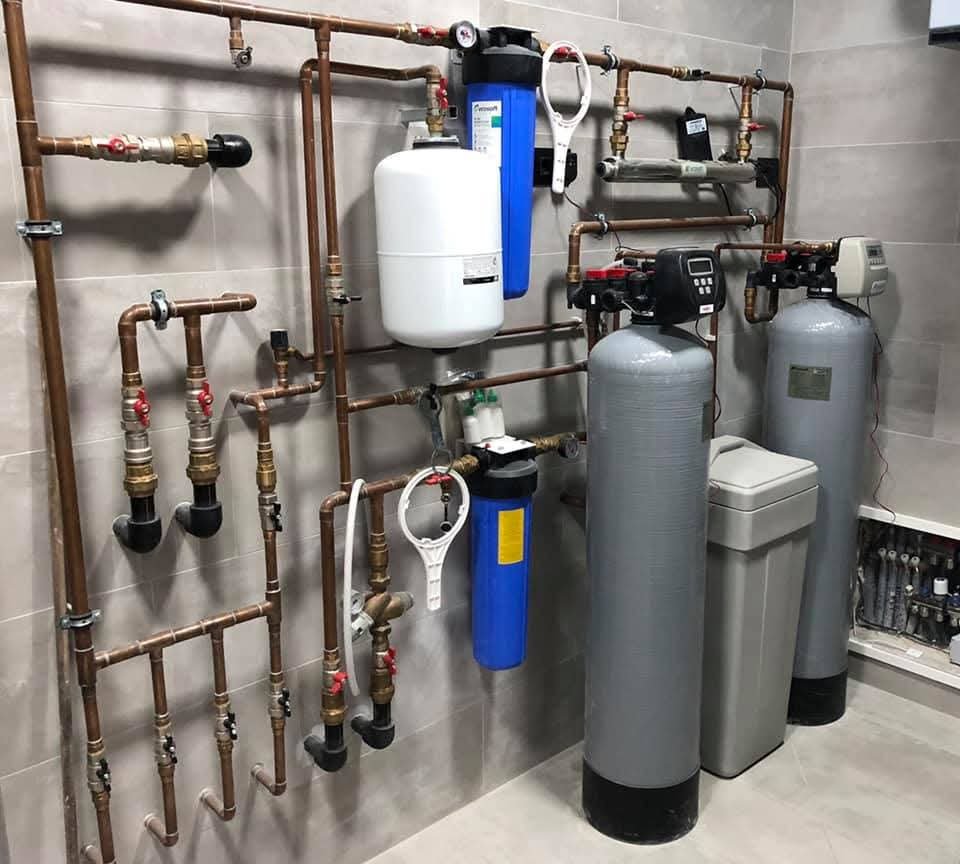
Water softener systems installed by Plumb Heating Ltd – positioned neatly in kitchen cupboards, utility rooms, and garages.
A water softener is a whole-house appliance that removes the calcium and magnesium minerals from your water supply before they reach your taps, appliances, and heating system. It connects directly to the incoming mains supply and treats all the water entering your property.
How does it work?
The most widely used type – and the one we install – is an ion exchange water softener. Inside the unit is a resin bed made up of tiny beads carrying sodium ions. As hard water passes through, the calcium and magnesium ions swap places with the sodium ions in a process called ion exchange. The water that exits is free of the hardness minerals and is described as “softened.”
Periodically – typically every few days, depending on household usage – the resin bed regenerates itself by flushing with a salt brine solution, which recharges the beads ready for the next cycle. This is why water softeners require regular salt top-ups, usually every four to eight weeks for a typical family.
Types of water softener
| Type | How it works | Best for |
|---|---|---|
| Ion Exchange (salt-based) | Removes calcium & magnesium via resin bed; regenerates with salt | Whole-house protection; very hard water areas like Hemel Hempstead |
| Twin-tank ion exchange | Two resin tanks – one always in service, no break in soft water supply | Larger households with high water demand |
| Salt-free / Template Assisted Crystallisation | Alters mineral structure so it does not deposit as scale; does not remove minerals | Scale prevention only; lower maintenance; not a true softener |
| Magnetic / Electronic descaler | Uses magnetic field to alter mineral behaviour | Entry-level scale reduction; limited evidence base for effectiveness |
For homes in Hemel Hempstead and across Hertfordshire – where hardness regularly exceeds 300 mg/L – a salt-based ion exchange softener is the solution with the clearest, most well-documented results. It is what we recommend and install in the great majority of cases.
What Is a Water Filter – and How Is It Different?
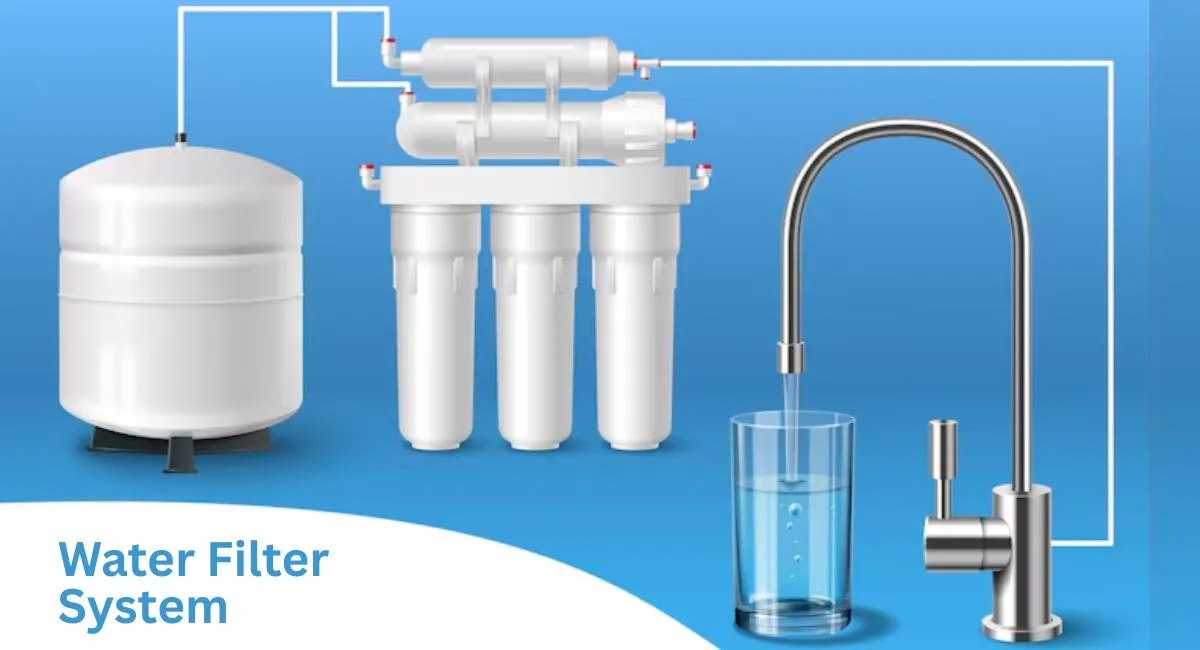
An under-sink water filter system – delivering clean, great-tasting drinking water directly from a dedicated tap.
A water filter serves a different purpose to a water softener. Where a softener removes hardness minerals to protect your home’s plumbing and appliances, a water filter focuses on improving the quality and taste of your drinking water by removing impurities, chlorine, sediment, and other contaminants.
Affinity Water treats your water supply to a safe, legal standard before it leaves the treatment works – but the chlorine used in that process, along with any sediment picked up in the pipe network on the way to your property, can affect taste and odour in ways that a filter eliminates at the point of use.
Types of water filter we install
- Under-sink water filters: The most popular choice for Hertfordshire homes. The filter unit sits neatly under the kitchen sink and connects to a dedicated filtered water tap – giving you clean, fresh-tasting water for drinking and cooking, completely separate from the main supply.
- Whole-house water filtration systems: Filter the entire incoming water supply at the point of entry, removing sediment and particulates throughout the property. Often used in combination with a water softener.
- Reverse osmosis systems: The most thorough filtration method available for domestic use. Uses a semi-permeable membrane to remove a very wide range of impurities, including dissolved solids. Installed under the sink with a dedicated tap.
A water softener and a water filter are often confused – but they address completely different problems. A softener removes the minerals causing hardness. A filter removes impurities affecting taste and quality. Many Hertfordshire homeowners choose both: a whole-house softener for the plumbing and appliances, combined with an under-sink filter for drinking and cooking water.
Water Softener vs Water Filter: Which Does Your Home Need?
| Question | Water Softener | Water Filter |
|---|---|---|
| Does it protect the boiler and pipework? | ✅ Yes – removes the minerals that cause limescale | ❌ No |
| Does it improve drinking water taste? | Partially – removes minerals but not chlorine/sediment | ✅ Yes – removes chlorine, sediment, and impurities |
| Does it treat the whole house? | ✅ Yes – all water entering the property | Depends – under-sink filters treat one tap; whole-house systems treat all |
| Does it extend appliance lifespan? | ✅ Yes – significantly | Partially – whole-house sediment filters can protect some components |
| Does it reduce energy bills? | ✅ Yes – removes scale that causes heating inefficiency | ❌ No direct impact |
| Is it suitable for very hard water areas (300+ mg/L)? | ✅ Recommended | Recommended alongside a softener |
| Ongoing maintenance | Salt top-up every 4–8 weeks; annual service | Filter cartridge replacement every 6–12 months |
💡 Our recommendation for Hemel Hempstead and Hertfordshire homes: Given the hardness of the local water supply, a whole-house ion exchange water softener is the most impactful investment you can make for your property. Paired with an under-sink filter for the kitchen tap, you get the full combination – protected plumbing and appliances throughout the house, plus clean, great-tasting drinking water on demand. Not sure what you need? View our water softener and filter installation service or call us to arrange a free home survey.
The Benefits for Hertfordshire Homes – What Changes After Installation
The improvements that follow a water softener installation are not subtle. Most Hemel Hempstead homeowners notice the difference within the first week. Here is what to expect:
- No more limescale on taps, tiles, and shower screens – softened water leaves no mineral deposit on surfaces. Cleaning becomes noticeably faster and easier, and the results last far longer.
- Lower energy bills – with scale removed from the heating system, the boiler operates more efficiently. The Energy Saving Trust puts the annual saving for a typical Hertfordshire household at £96–£144 on heating costs alone.
- Longer appliance lifespan – washing machines, dishwashers, and kettles last significantly longer without the progressive mineral damage hard water causes. Research shows boilers in treated systems last 15 years compared to 8–10 in very hard water without treatment.
- Softer skin and hair – softened water rinses more cleanly, leaving no mineral film. Many customers with eczema or sensitive skin report meaningful improvement within weeks of installation.
- Softer laundry, less detergent – softened water lathers properly. British Water estimates a family of four saves around £200 per year on cleaning products, detergents, and personal care products combined.
- Better tasting drinking water – particularly when combined with an under-sink filter, which removes the residual chlorine taste that softening alone does not address.
- Protection for a new boiler investment – if you have recently had a new boiler installed, a water softener protects it from day one. Most leading manufacturers recommend softened or treated water to maintain warranty validity.
- Added property value – in a hard water area like Hertfordshire, a fitted water softener system is an increasingly sought-after feature that buyers and estate agents notice.
How Plumb Heating Ltd Installs Water Softeners and Water Filters
We handle the full process – from the initial water hardness test through to commissioning and handover. There are no hidden steps, no surprise costs, and no pressure to upgrade beyond what your home actually needs. You can find full details on our water softener installation service page.
Free Home Survey and Water Hardness Test
We visit your Hertfordshire property, test your water hardness on the spot, and assess the best installation location – kitchen cupboard, utility room, or garage. You get an honest recommendation before any commitment is made.
Clear, Fixed-Price Quotation
We provide a written, itemised quote covering the unit, all installation labour, pipework, bypass valves, drainage connections, and any optional extras. Everything is on the quote before we touch a thing – no additions later.
Professional Installation
Our qualified plumbers connect the softener to the incoming mains with proper bypass valves and a compliant waste drainage connection. We work cleanly and tidily, treating your home with care throughout. Most installations are completed in a single day.
Full Commissioning and Handover
Before we leave, the system is tested, programmed for your household’s usage, and fully explained to you – including how to top up salt and where to source it locally. You receive all documentation and warranty information before we go.
All Major Water Softener Brands Supplied and Installed
We are brand-agnostic – which means we recommend the system that is genuinely best suited to your home, your water, and your household usage, not whatever carries the highest margin. We supply and install the full range of leading UK water softener and water filter brands, including:
- Harvey Water Softeners – one of the UK’s most trusted brands, particularly well suited to the Hertfordshire market and its very hard water
- BWT – German-engineered systems with excellent salt efficiency and compact footprints
- Kinetico – non-electric, demand-operated systems that regenerate based on usage rather than a timer
- EcoWater – connected systems with smart monitoring and remote management
- Monarch – reliable, well-established systems with good availability of service parts
- TwinTec – twin-tank designs that ensure a continuous supply of soft water without regeneration downtime
We will give you straight, unbiased advice on capacity, regeneration type (timer versus meter-controlled), salt efficiency, and running costs before you make any decision. Every unit comes with full manufacturer warranty, and our own 12-month workmanship guarantee on top.
Frequently Asked Questions
Is hard water in Hemel Hempstead actually harmful to drink?
Hard water is safe to drink. The calcium and magnesium it contains are not harmful at the concentrations found in the UK water supply – in fact, they contribute slightly to mineral intake. The problem is not health risk but the progressive physical and financial damage those minerals cause to your home’s infrastructure, appliances, and heating system over time.
Will softened water be safe to drink?
Softened water contains a small amount of additional sodium as a result of the ion exchange process. For most people this is entirely fine. If you prefer, we can install a separate filtered drinking water tap in the kitchen that bypasses the softener – giving you softened water throughout the house and clean, filtered water for drinking and cooking. This is the combination most of our Hertfordshire customers choose.
How quickly do you notice the difference after a water softener is installed?
Most homeowners notice changes within the first week. Showers and baths feel different immediately. Limescale stops accumulating on surfaces from day one. The kettle stays clean. The boiler efficiency improvement takes a little longer to appear on bills, but the protection begins the moment softened water starts circulating through the system.
Do I need a water softener if my boiler is new?
A new boiler in Hemel Hempstead or anywhere across Hertfordshire is exposed to the same hard water supply from the day it is installed. Installing a water softener at the same time as a new boiler – or as soon as possible after – is the most cost-effective approach, because you prevent scale from building up in the first place rather than treating the consequences later. Most leading boiler manufacturers recommend treated water and some specify it as a condition of the warranty. If you suspect existing scale damage, our power flushing service can clean the system before installation.
How much does a water softener cost to run?
The main ongoing cost is salt – typically a few pounds per month depending on household usage. Annual servicing is recommended to keep the system performing correctly. Set against the savings on energy bills, detergents, and appliance replacement, a water softener in a hard water area like Hertfordshire typically pays for itself within four to six years – and lasts 15 to 20 years with proper maintenance.
Can you install a water filter without a water softener?
Yes, absolutely. If your primary interest is improving the taste and quality of your drinking water, an under-sink filter can be installed independently. It will not address the limescale and heating efficiency issues caused by hard water, but it will give you noticeably cleaner, better-tasting water from the kitchen tap. We are happy to advise on the right solution for your specific priorities at the free survey.
Do you cover areas outside Hemel Hempstead?
We cover all of Hertfordshire and the surrounding area – including St Albans, Berkhamsted, Harpenden, Welwyn Garden City, Rickmansworth, and across into Buckinghamshire including Amersham, Chesham, and Beaconsfield. See our full areas we cover page or call us to confirm we reach your address.
Sources & References
- WaterHard.uk – Water Hardness in Hertfordshire: Average 303 ppm – waterhard.uk/county/hertfordshire
- TapWater.uk – UK Water Hardness Map 2026 – tapwater.uk/guides/water-hardness-map
- Hemel Today – Hemel Hempstead has some of the hardest water in the UK, January 2020 – hemeltoday.co.uk
- British Water – 12% energy loss per 1.6mm of limescale on a heating element; rises to 24% at 3mm – cited via Monarch Water and P&H Engineering
- Affinity Water – Largest water-only company in the UK; 3.8 million customers; chalk aquifer supply – WaterGrade.co.uk – Affinity Water profile
- Heating and Plumbing World – Water Softeners: Do They Really Extend Boiler Life? (boilers in very hard water areas fail 2.3x more frequently; Energy Saving Trust efficiency calculations) – heatingandplumbingworld.co.uk
- PHAM News – High Efficiency Water Softening: around 60% of the UK has hard water – phamnews.co.uk
- iHeat – How Hard Water Affects Your Boiler’s Performance – iheat.co.uk
Note on the 333 mg/L figure: This figure for Hemel Hempstead appears in a widely circulated list of UK hardest water towns, reported by regional press including Hemel Today (January 2020). Affinity Water’s published data for HP postcodes confirms the water is classified as “very hard.” For the most current reading specific to your postcode, visit affinitywater.co.uk/water-quality. The British Water 12% efficiency figure is widely cited across the industry and confirmed by multiple independent sources including Monarch Water, P&H Engineering, and PureH2O.
